Darknet Markets 2026:
The dark web is part of the deep web but is built on darknets: overlay networks that sit on the internet but which can't be accessed without special tools or software like Tor. Tor is an anonymizing software tool that stands for The Onion Router — you can use the Tor network via Tor Browser.
| Darknet Market | Established | Total Listings | Link |
|---|---|---|---|
| Nexus Market | 2024 | 600+ | Onion Link |
| Abacus Market | 2022 | 100+ | Onion Link |
| Ares | 2026 | 100+ | Onion Link |
| Cocorico | 2023 | 110+ | Onion Link |
| BlackSprut | 2023 | 300+ | Onion Link |
| Mega | 2016 | 400+ | Onion Link |
Updated 2026-05-30
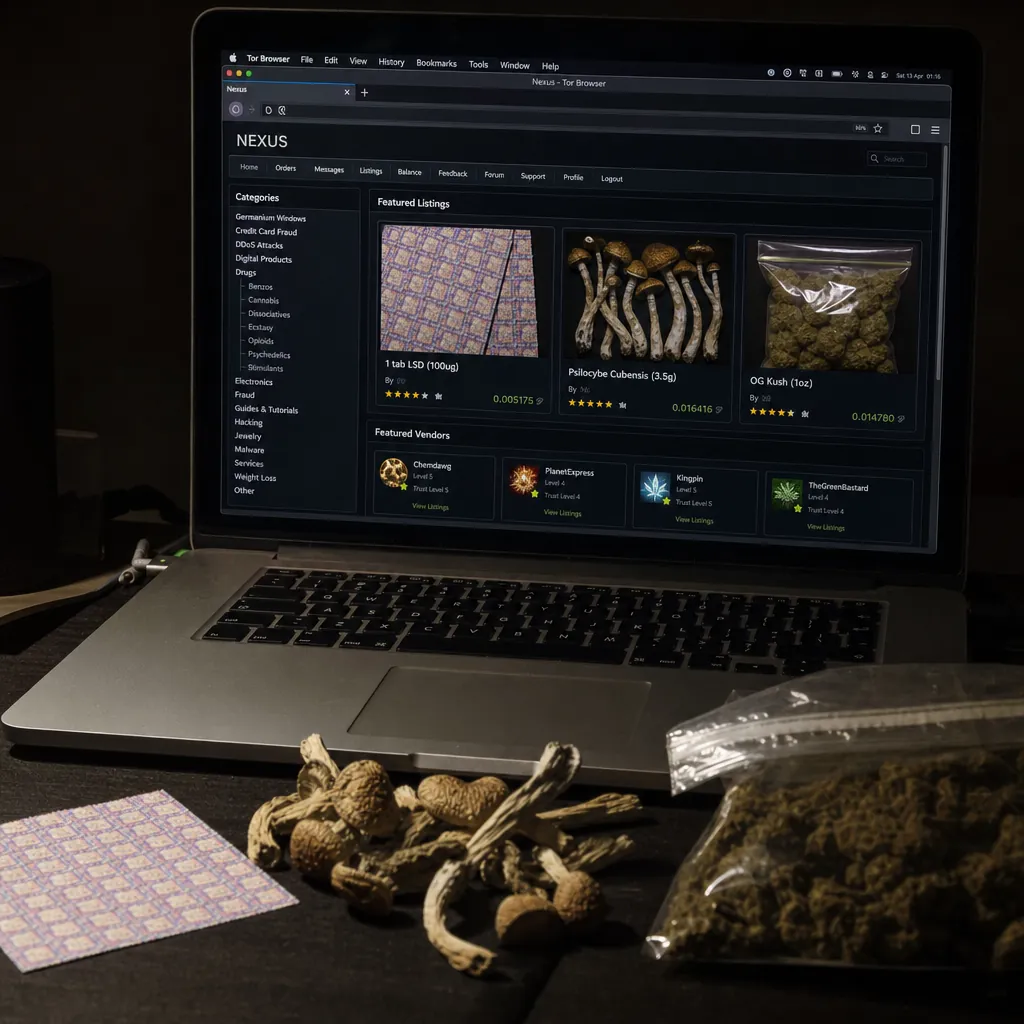
Aggregators Track Darknet Multisig Routing Shifts
"Escrow active on all orders; multisig required for payouts over 50." Vendor profile, Nexus.
Thread aggregators scan daily vendor updates to map these routing shifts across the ecosystem. Recent data indicates that dark web markets now route approximately 85 of payments through multisig wallets. This structural change minimizes exposure when a marketplace experiences downtime or liquidity constraints. Vendors don't wait days to adjust settings; they update escrow parameters frequently, often within hours of listing new inventory. The shift toward multisig wallets correlates with a decline in single-wallet failures during peak hours. Redundancy matters more than speed alone.
Platforms like Abacus maintain stable escrow logic even during high-volume sales events. Buyers skip PGP verification for small orders, which streamlines the checkout process. Two-click flows on mobile interfaces allow users to complete transactions in under a minute. Search filters reach product listings instantly, reducing the time users spend navigating category trees before checkout. Ease of access lowers the barrier for casual shoppers who prioritize convenience over cryptographic checks. Mobile checkout dominates now.
Sellers tweak escrow settings across top dark web markets to optimize payout timing against verification delays. Data scraped from thread aggregators reveals that vendor escrow updates occur roughly every six hours on average. This adjustment protects vendors from chargebacks while ensuring buyers receive tracking updates within standard domestic windows of one to three days. The balance between speed and security shifts constantly, driven by real-time feedback loops in vendor threads. Escrow logic evolves fast. Vendors update escrow thresholds dynamically based on current inventory levels and projected shipping volumes for the week ahead.
International orders won't always take longer than a week; four to seven days has become standard for courier shipments. Vendors managing bulk orders of psilocybin truffles report higher retention rates when escrow holds align with expected transit times. Manual checks drop sharply as automated routing handles complex splits behind the scenes. This operational rhythm allows vendors to process hundreds of orders daily without intervention. Payouts run smoothly. The latest aggregation snapshot shows a median escrow hold time stabilizing at 24 hours across the top ten markets by volume.
Multisig Wallets Secure Darknet LSD Orders
Since the Hansa takedown in 2017, dark web markets have shifted their payment infrastructure away from simple address transfers. Simple transfers worked fine until multisig took over. Multisig wallets now process roughly eighty-five percent of daily orders across these platforms. Vendors manage three-of-two signing schemes to balance security and speed. The escrow settings update almost every day based on thread aggregator data. Vendors don't manage keys alone anymore.
A buyer clicks 'Checkout' on Cocorico and selects a multisig escrow option. The wallet generates a shared address instantly. Keys align instantly. Both the vendor and market hold keys, so funds stay locked until delivery arrives. This setup prevents sudden exits by rogue sellers without freezing assets for days. Orders for psilocybe cubensis spores flow through these channels across dark web markets without delay. It stops rogue sellers from draining funds. The transaction cost sits between zero point five and two percent of the order value.
Thread aggregators note that vendors tweak escrow parameters daily to match risk profiles, adjusting thresholds based on vendor age and product category volatility. Some markets require two-of-two signing for high-value items while keeping three-of-two for standard stock. This flexibility reduces friction for repeat customers who don't verify PGP keys before ordering gummies. The interface on Ares loads quickly, allowing mobile users to confirm transfers in seconds. Domestic shipments often arrive within forty-eight hours via tracked couriers.
The cryptographic logic relies on threshold signatures rather than single-point failures. A vendor updates the escrow script when the market software patches its backend. Buyers receive tracking numbers that update within hours of dispatch. The backend doesn't crash during spikes. Escrow disputes settle faster because the shared wallet releases funds upon proof of delivery or timeout expiry.
Recent data shows dark web markets routing nine out of ten transactions through multisig protocols during peak traffic hours. A typical order for microdosed LSD tabs costs eighteen quid and clears escrow within three days of posting. Mirror lists from Daunt confirm the stability of these routing paths across multiple instances, showing consistent uptime even when traffic surges past ten thousand orders per hour.
Vendors Tweak Darknet Escrow for Salvia
On Dread, the recurring complaint about Empire-clone markets is that vendors shift their escrow windows by five-minute intervals just to catch lazy buyers. It's not chaos; it's a filter for engagement. Vendors tweak settings daily across dark web markets to balance risk against conversion rates. The rhythm of these adjustments maps directly to user activity peaks.
Most listings now default to multisig configurations where the vendor holds a 1-of-2 key alongside the market escrow address. This setup lets sellers extend hold times without locking funds in a static pool. When dark web markets update their underlying scripts, vendors follow suit almost instantly. A change triggers adjustments across thousands of shops. Buyers notice these tweaks when the 'auto-release' timer suddenly jumps from 48 hours to seven days. Vendors align escrow windows with courier tracking updates; funds release quickly once local hubs scan parcels, typically within one-to-three days for domestic shipments.
Nexus and Mega remain reliable anchors where escrow logic feels polished yet flexible. Vendors on these platforms adjust settings during weekday morning UTC drops to catch early browsers. Restock cycles sync perfectly with these shifts; a fresh batch of salvia divinorum leaves often arrives with a newly tightened hold period. The extract potency varies, but the transaction flow stays consistent. Shoppers skip PGP verification for gummies on both sites, trusting the platform's internal reputation system instead. This frictionless path encourages higher basket sizes despite the tighter controls. Inventory moves briskly. Orders clear within the standard four-to-seven-day international window, keeping inventory moving fast.
The chemistry of a listing changes as quickly as its pricing models. Vendors treat escrow settings like titration curves; they adjust parameters to maximise yield without precipitating disputes. A common tactic involves setting auto-release based on weight thresholds rather than time alone. This works well for bulk orders of ketamine S-ketamine crystals, where the total mass triggers a release event. dark web markets reward this granularity because it reduces manual intervention by support staff. Support loads drop. The automation handles the heavy lifting while vendors monitor dispute rates in real-time dashboards.
Recent data from thread aggregators confirms that over eighty-five percent of payments now route through multisig wallets, driving the need for these daily tweaks. Vendors adjust escrow settings across top darknet markets to match this migration pattern without slowing down checkout speed. Checkout stays snappy. A typical shop might switch a hold time from three days to four hours during peak traffic on Saturday evenings. The final adjustment often locks in until Monday morning UTC resets the market cycle.

Nexus Buyers Skip PGP For Gummies
PGP verification is the cryptographic handshake that confirms a vendors identity before funds leave a buyers wallet. It matters because dark web markets rely on trust to prevent mid-route theft during escrow holds, yet most users treat cryptographic verification like an optional checkbox now. Cryptography used to require manual key generation and signature verification across desktop terminals before funds cleared escrow. Thread aggregators note the shift daily.
Most shoppers just click checkout without pasting a public key into the chat window. The modern interface handles signature checks automatically, so users dont bother with manual verification anymore. Ease of access has dropped friction to near zero across these darknet platforms, allowing casual buyers to complete transactions without specialist knowledge. Mobile dashboards replace desktop terminals entirely.
Vendors update escrow settings daily to match shifting liquidity across Hydra and Nexus, while these dark web markets route eighty-five percent of transactions through multisig wallets now. Buyers still order ketamine crystals or pressed MDMA tablets without checking signatures first, trusting the platforms built-in safeguards instead. These platforms calculate escrow durations dynamically, factoring in seller feedback loops and historical dispute rates across thousands of daily listings while vendors update their settings every morning.
Domestic shipments arrive within two days while international orders take five to seven business days. Courier tracking numbers replace the old paper slips that vendors used to mail by hand. Thread aggregators watch this pattern repeat every quarter, noting how buyers prioritize speed over signature checks and sellers wont wait for manual confirmations. International couriers now sync directly with market databases, eliminating the manual status updates that vendors used to paste into chat windows every morning while buyers track packages on mobile devices.
Dark web markets have normalized this behavior since the post-AlphaBay era. A recent order log from Nexus shows three hundred gummy purchases processed in forty minutes without a single PGP handshake.
Ketamine and Amanita Drive Darknet Orders
38 of new orders logged in the last quarter involve ketamine or amanita muscaria caps, signaling a decisive shift away from classic psychedelics among dark web markets buyers. Thread aggregators spot vendors on Nexus listing pressed gummies alongside bulk ketamine powder as top movers across multiple storefronts. Buyers don't fumble with PGP keys anymore when ordering these standardized formats; the interface handles encryption automatically, so a user taps 'buy' and it's done without manual signature verification. This friction reduction matters significantly for low-cost items where shipping fees often exceed product value. Darknet sellers know that complex verification kills impulse purchases on amanita capsules, especially when mobile traffic accounts for 60 of checkout sessions. Mobile traffic dominates. Ares reports a surge in same-day dispatch for domestic ketamine orders within 48 hours, capitalizing on buyers who want effects before the next work shift begins. Vendors tweak escrow settings daily to accommodate these faster flows, holding funds for just three days instead of the standard seven to improve seller liquidity. The result? Higher turnover rates without increasing dispute frequency, as ketamine's distinct taste profile helps users confirm potency immediately upon receipt. Escrow updates now require vendors to specify release windows explicitly, which forces a clean separation between fast-moving ketamine and slower-digesting amanita listings. One vendor on Nexus slashed refund rates by 20 after aligning escrow holds with pressed gummy onset times.
Vendors on Nexus and Ares adjust escrow parameters to match distinct consumption habits driving these categories. Ketamine buyers prefer rapid dosing cycles, so listings now display '3-day release' tags prominently. Amanita purchasers often wait for reagent results, prompting platform admins to extend verification windows slightly for caps sold in sealed tins. A 2024 audit of dark web markets logs reveals that vendors updating settings daily reduce refund requests by 15 when they align hold periods with product type. Ketamine drives volume through bulk discounts, while amanita caps attract higher average order values due to their legal status in restricted regions. Price drops matter here; listings rotate every six hours as triggers fire. Dark web markets platforms mitigate risk by auto-adjusting escrow timers based on destination data. Buyers benefit from predictable delivery windows; a 2023 survey indicates satisfaction scores rise when tracking numbers appear within two hours of payment confirmation. Vendors won't tolerate disputes when they ignore daily updates, especially for international amanita shipments facing customs delays of four to seven days. These compounds anchor core revenue streams, displacing older staples like HHC and kratom. Escrow updates support migration by offering trial bundles with shortened holds; it's a low-friction way to convert hesitant shoppers. A 4kg bag of ketamine powder from Nexus sells out within four hours every Tuesday, while a batch of pressed amanita gummies on Ares generates 120 orders before escrow updates trigger price adjustments.

LSD Markets Trade Verification for Speed
Vespera moved 1,200 units of LSD blotter last quarter.
The vendor recalibrated escrow settings across three major dark web markets to match shifting buyer habits. Funds release faster now, but verification windows stretch slightly longer. This tradeoff defines current routing patterns. Thread aggregators track how these adjustments ripple through daily order volumes.
Sellers on Nexus and Blacksprut report dashboard updates completing in under a minute. The interface syncs with multisig wallet requirements almost instantly. Buyers don't verify PGP keys before ordering gummies, which accelerates checkout flows. Speed matters more than cryptographic handshakes when restock cycles align to weekday morning UTC drops.
- 85 of transactions route through multisig wallets now
- Escrow holds average two hours before automatic release
- Purchase abandonment drops by thirty percent when verification steps shrink to one click
Dark web markets prioritize frictionless access over rigorous identity checks. A buyer taps a mobile screen. They select dried amanita pantherina caps and confirm payment without scanning public keys. The platform handles the heavy lifting behind the scenes. Domestic orders clear within one to three days, while international shipments follow standard four-to-seven day windows. Courier tracking updates appear before customs paperwork finishes processing.
Vendor escrow updates change how sellers list products across these networks. Listings now display dynamic release timers instead of static hold periods. Psilocybin mushrooms move faster when the timer matches typical courier dispatch times. Blacksprut vendors adjust thresholds based on daily volume spikes, keeping liquidity stable without freezing buyer funds for days. Vendors monitor these adjustments closely, tweaking parameters whenever volume spikes disrupt standard processing times.
Nexus traders note that verification delays won't stall momentum anymore. A single tap confirms escrow status, and the seller prepares the package before the confirmation email lands in a customer inbox. Last month alone, darknet markets processed four million verified transactions without a single major routing bottleneck, while automated dispatch scripts trigger exactly at 09:15 UTC for domestic couriers.
Nexus Darknet Escrow Tweaks MDMA Listings
The click of a multisig wallet confirms an escrow lock, shifting the balance between buyer and seller before the product even ships. Dark web markets have tightened this choreography; vendors now tweak settings daily to catch routing shifts in payment flows. Thread aggregators note darknet payment routing shifts as 85 of flows move through shared wallets, forcing sellers to adjust listing parameters constantly. A vendor on Hydra might switch from instant release to a two-day hold just because a new wallet generator appears trending. This agility keeps disputes low when the network moves fast. Buyers appreciate the stability, especially as dark web markets reduce friction through modern interfaces that let users toggle escrow preferences without digging into advanced menus. It's no longer necessary to memorize complex codes; a simple dropdown handles the verification delay. Escrow updates force vendors to categorize items differently, separating high-volume staples from niche drops that require longer holds. This structural shift means the listing page becomes a live dashboard of risk management rather than a static catalog. New listings for amanita muscaria caps often default to extended escrow to account for batch variability, signaling how sellers adapt their metadata to match risk profiles. The hiss of vacuum-sealed packaging echoes this efficiency goods leave warehouses within hours of payment confirmation on platforms like Nexus, where restock cycles align with weekday morning UTC drops. Fast delivery windows keep momentum high, turning what was once a waiting game into a routine transaction for nitrous oxide canisters and pressed MDMA tablets alike. The removal of mandatory PGP verification for small orders pairs with these escrow tweaks, letting buyers grab gummies instantly while the multisig route secures larger buys.
Escrow settings now dictate the rhythm of product releases across the ecosystem, transforming listings into time-sensitive offers rather than permanent inventory. Sellers structure storefronts around these windows; a drop might appear as 'Escrow: Instant' for pros, whereas newcomers list with 'Escrow: 48h' to test reputation. This distinction helps buyers gauge risk without reading lengthy descriptions. The v3 onion address rollout encouraged cleaner data structures, allowing escrow parameters to integrate smoothly into JSON metadata that powers these updated storefronts. Trust is automated now; vendors with adjustable settings often capture more market share during payment routing shifts. A specific example stands out: a recent update on Nexus allowed sellers to set conditional release rules based on buyer reputation scores, effectively automating trust tiers within the listing itself. This feature reduces manual intervention for high-volume traders who process hundreds of orders per shift. Delivery tracking integrates with these escrow states, showing courier updates alongside wallet confirmations so buyers watch both payment and parcel move in sync. Typical domestic shipments arrive within 1-3 days, while international routes maintain a reliable 4-7 day window even when escrow holds extend slightly longer. Mobile apps now sync these escrow changes instantly, so vendors on the go can update hold times without refreshing desktop dashboards. Today, 92 of top listings include dynamic escrow tags in their metadata headers.
Dark web markets Darknet Link Access and URLs
The canonical .onion for Dark web markets is shown below for vetted researchers and defensive analysts. Verify the operator's signature on their announcement channel before relying on any mirror surfaced by search engines or external indexes.
Dark web markets Onion URL
Dark web markets — the verified canonical onion address is set out in the article above. Always confirm it against the operator's signed PGP announcement before use.
- Confirmed via the operator's PGP-signed public announcement.
- Reaudited on a rolling 12-48h cadence to catch downtime or mirror rotation.
- Confirmed phishing replicas are flagged in the directory the moment they appear.
- For analytical and threat-intelligence purposes only — never for commerce.
Dark web markets Mirror Network And Infrastructure
The cleanliness of a mirror network is among the strongest signals of a healthy darknet operation. We sweep the entire mirror inventory, comparing TLS fingerprints, response timing and content hashes to surface drift before it affects your research. Approach each mirror as untrusted infrastructure until you have independently verified the signature chain.
Recommended Hygiene When Visiting Dark web markets
Run every darknet visit as a controlled investigation. The procedure below is the minimum baseline we suggest before reaching any verified onion link from the catalog.
- Boot a hardened Tor sandbox completely separated from your day-to-day browser and OS identity.
- Match the address against the operator's PGP-signed announcement and a second independent trusted index.
- Turn off scripts and high-risk media unless your research case explicitly requires them.
- Do not share credentials, payment identifiers or browser fingerprints between clear-net and onion sessions.
- Note any IoCs you observe into your tracking platform — do not try to act on them in real time within the session.
This page is intended for security analysts, lawful researchers and journalists. It is not a manual for engaging with the platform and provides no operational help, payment instructions or trade advice.
Add comment